30.3.2023: Laascaanood, Sool
The conflict in Laascaanood enters a new chapter as the separatist Somaliland military announced on Sunday their intent to launch offensive attacks against SSC-Khaatumo forces stationed in the city marking a shift in strategy from Hargeisa as they attacked the city on Sunday morning.
For months, the Bihi regime in Hargeisa has been pushing a narrative to the world which can be broken down into the following:
- The conflict in Laascaanood started because militants from Al-Shabab embedded themselves within the locals of Laascaanood and launch an attack against Somaliland positions.
- The Somaliland security forces in Sool had been attacked by forces outside the Somaliland region of Somalia, in neighbouring Puntland State of Somalia as well as the Haud region or Somali Galbeed.
- The conflict was orchestrated by the Federal Government in Mogadishu initially during the presidency of Mohamed Abdullahi Farmaajo but now under Hassan Sheikh Mohamoud.
- The conflict in Sool is a ‘civil war’ because the Bihi regime considers Somaliland separate from the rest of the Somali Republic with borders stretching to the one initially created by the oppressive British colonial administration which subjected the locals of not just northern Somalia but also the African continent.
In other words, the regime in Hargeisa conveyed that it was the victim of an attack all along and it simply was attempting to find a solution to the conflict but the underlining issue was hijacked by militants disguised as local leaders. This was despite the overwhelming evidence that debunked this narrative. For instance:
- The simple fact that Somaliland held the city since 2007 and never reported an incident of terrorism until January 2023 which coincided with attempts by local leaders in Sool to rejected the notion of secessionism.
- The fact that separatist Somaliland authorities under the Bihi regime were killing protesters throughout the peaceful protests that took place in the city following the unjust killing of Abdifatah Abdullahi Hadraawi, the final assassination that sparked the initial unrest.
- This assassination was one of more than 100 that have been on-going in the city since 2009 that remain unsolved.
- Locals continue to blame the Somaliland authorities for the spike in killings of high ranking officials.
- The fact that both Puntland State and the Federal Government both denied involvement in the conflict in any way and there has been no evidence that is the case.
- The presence of clan militia does not equate to government forces.
- Somaliland has consistently launched dawn raids, breaking promises that it wanted a ceasefire.
- The indiscriminate bombing has destroyed homes, schools and residential property as well as public property.
- Finally, the simple fact that Somaliland forces continue to refuse to withdraw from Sool to initiate talks with clan elders in the region.
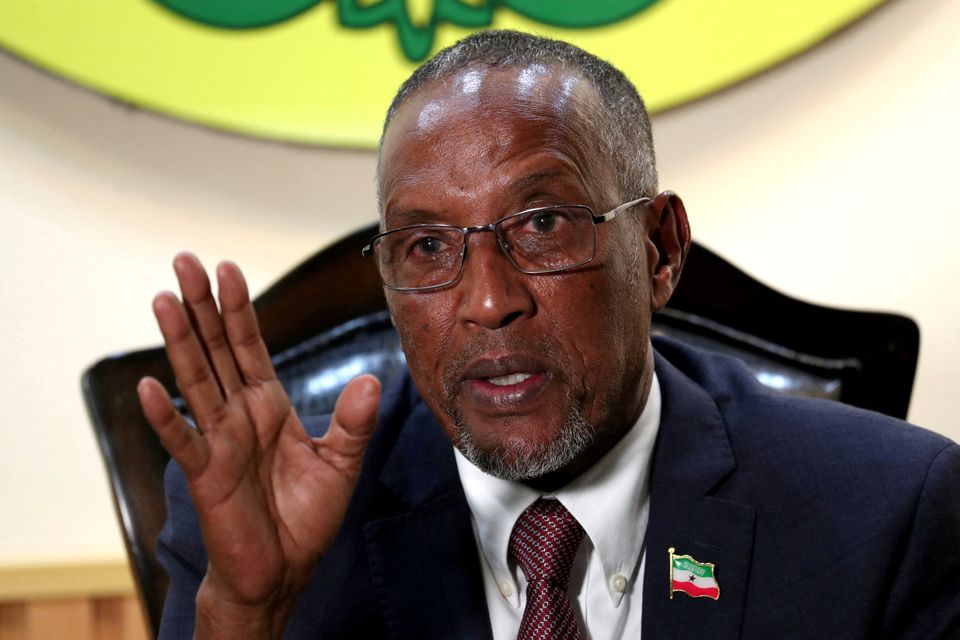
The announcement of the offensive in Sool coincided with the visit of Somaliland leader Muse Bihi to the military headquarters in Hargeisa where senior security officials briefed him on the Laascaanood conflict.
Speaking to the press, the spokesman for Somaliland’s military, Abdi Abdullahi Hassan Abdi Dheere stated that Hargeisa had “lost all patience after nearly two months of conflict”. He went to further to say that Somaliland forces “will begin an attack on SSC-Khaatumo forces in Sool”.
The announcement came as Somaliland launched an unsuccessful attack against SSC-Khaatumo position on the morning of Sunday in which the city saw its heaviest fighting over the past week.
There are currently reports that Somaliland forces are preparing its units on multiple fronts on the western and eastern that are important fronts for both forces.
Both sides blamed the other for Sunday’s attack with the SSC-Khaatumo Council stating that Hargeisa launched a dawn attack in a bid to derail the planned visit of clan elders from southern Somalia including the Hawiye and Rahanweyn clans.
Why did Somaliland want to derail the meetings?
The mediation of clan elders from other regions from Somalia is beneficial to SSC-Khaatumo Council because it demonstrates that this conflict is between Somalis within the borders of the Somali Republic rather than one centralised to the Somaliland region.
Ultimately, this weakens the argument pushed by the separatist Somaliland regime that the Somaliland region is separate from the rest of Somalia as it shows the contrary.
Additionally, President Muse Bihi has already pushed a narrative that the conflict in Sool is one that is underlined by clan tensions exclusive to the Somaliland region. However, the presence of clan elders from the South demonstrates that this far beyond a local clan conflict.
For instance, if we look at the conflict that took place in Ceel-Afweyn a few years ago between clans in the region, it was traditional elders that mediated and ended the conflict rather than the Somaliland military launching an all-out war. It is clear this conflict is one with underlining political issues. More specifically, the issue of separatism versus unionism
So what does Somaliland under Bihi have to gain?
Ultimately, the Somaliland regime wants to recapture the large swathes of lands it lost to the SSC-Khaatumo Council which overran the city of Laascaanood including most of its surrounding territory.
If victory were achieved for the Bihi regime, it would attempt to find local support to push its narrative and oppress any opposition to its rule as it had done so for the past decade.
However, if Somaliland were to fail in its objective to capture Laascaanood and Sool, it would be forced to withdraw from Goojecade. Ultimately, any further withdraw for Somaliland would result in the Bihi regime being left with no choice but completely withdraw from Sool and ending any claim it had to the region as it failed both politically and militarily to capture the town.
What has the SSC-Khaatumo Council said about recent developments?
The Council Spokesman, Caaqil Abdirizak Mohamed Hasan Falaalug stated that Somaliland would not likely launch an attack greater than its offensive on Sunday.
Speaking to Gaylan Media, the Commander of the SSC-Khaatumo Forces, General Sa’eed Shoodhe stated that calls by the Bihi regime for a ceasefire and dialogue was an attempt to deceive the world and mislead the international community.
He went on further to say his forces are ready to fend off any Somaliland attack and that his forces will be ready for a ceasefire once all Somaliland forces withdraw from the Sool region.
Indeed, Somaliland has been launching attacks on the city since the conflict began and it is not something new to see another offensive.
The reality is that Somaliland has been in preparation for this attack for weeks now despite President Bihi stating that he was ready for talks only last week.
The declaration of war removed the thin cloth that separatist Somaliland authorities attempt to use to cover their covert attempts to militarily quash the resistance to its separatist agenda in Sool.
What about the Addis Ababa Talks?
The talks seem to have collapsed as Somaliland declares an offensive. In other words, the decision by Bihi has put the final nail in the coffin for any possible talks between the two sides for the foreseeable future.
While Hargeisa did not provide large amounts of detail regarding talks it had with the Ethiopian delegation and possible talks in Addis Ababa, the SSC-Khaatumo Council made it clear as to why the talks are stalling.
Speaking to the press, Garaad Cabdisalaan Hasan Mohamed stated that the leadership was grateful to Ethiopia that wants to resolve this conflict. However, he highlighted that the environment is not right with constant artillery bombardments and road blockades.
“The Ethiopians know that the bombing is on-going”, he said.
It seems as though the Council was not wrong because separatist Somaliland is now ready for another offensive as they claimed on Sunday. To begin an offensive, there are a series of objectives that must be completed before such a launch including:
- The softening of defences via artillery and aerial bombardment
- Encirclement and cutting off supplies
- Raids to keep opposing forces on edge.
All the above actions have been taken by Somaliland forces in recent weeks despite major setbacks on these objectives.
Where is the Federal Government?
The Federal Government has remained quiet about the conflict in Laascaanood aside from outlining a neutral position that both sides need to engage in dialogue.
It has not actively attempted to intervene or provide a solution for both sides as the conflict rages on to the dismay of many Somalis.
When President Hassan Sheikh and his government take responsibility and play a leading role in finding a solution to the conflict?
The active role being taken by Ethiopia to mediate internal Somali issues demonstrates the failures of this administration.
 Horumar
Leave a comment