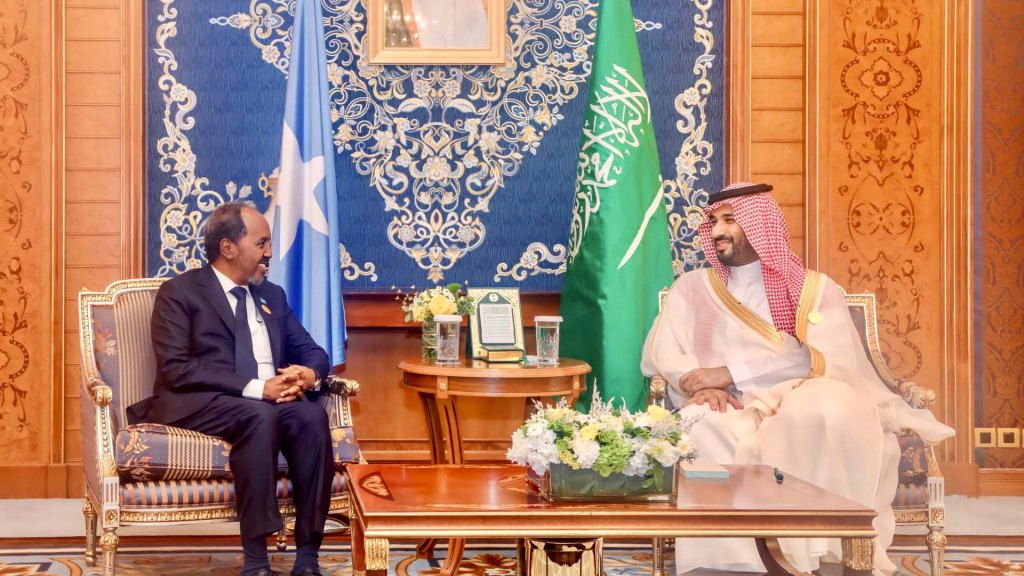
25.06.2025 – Mogadishu, Somalia
For decades, Saudi Arabia has stood as one of Somalia’s most important allies in the Middle East, its influence rooted deeply in shared religious heritage and longstanding diplomatic and economic ties. However, in recent years, Somalia’s relationship with Riyadh appears to have diminished in visibility and impact, while other regional actors such as the UAE, Qatar, and Türkiye have expanded their presence and influence in the Horn of Africa.
Historical Foundations
The connection between Somalia and Saudi Arabia has traditionally been strong and multifaceted. As the custodian of Islam’s holiest sites, Saudi Arabia holds significant religious importance to Somalia’s Muslim population. Beyond the spiritual ties, Riyadh has historically provided substantial humanitarian aid, development assistance, and diplomatic support to Somalia, reinforcing a partnership that extended into security cooperation, particularly in counterterrorism efforts against extremist groups.
In addition, there are deep-rooted historic tribal and cultural links between the people of what is now Saudi Arabia and Somalia. These connections stem from centuries of maritime trade across the Red Sea and the Gulf of Aden, shared Islamic faith, and genealogical ties. Somali coastal communities and Arabian tribes engaged in active trade, exchanging goods, ideas, and people through key ports such as Zeila, Berbera and far south as Mogadishu. Both societies’ similar tribal structures based on kinship and customary law fostered mutual understanding and alliances. These multifaceted historic relationships laid a foundation of cultural affinity and solidarity that endured for centuries prior to colonialism.
Shifting Priorities and Regional Competition
Despite this deep-rooted relationship, Saudi Arabia’s direct involvement in Somalia has seen a noticeable reduction over the past decade. This shift can be attributed to several factors:
- Focus on Regional Challenges: Saudi Arabia’s engagement in the Yemen conflict, broader regional rivalries, and ambitious domestic reforms under Vision 2030 have reallocated resources and attention away from Somalia and the Horn of Africa.
- Competition with Other Gulf and Regional Powers: The United Arab Emirates has emerged as a significant player in Somalia, investing heavily in strategic ports like Berbera and Kismayo and backing key political factions including the separatists in Somaliland as well as other Federal Member States such as Puntland and Jubaland. Meanwhile, Qatar has increased its footprint through humanitarian aid and diplomatic efforts, often positioning itself as a mediator in regional disputes. Türkiye, distinct from Gulf interests, has aggressively deepened its involvement by funding major infrastructure and oil exploration projects, providing military training, and expanding its diplomatic reach.
- Cautious Saudi Approach: Riyadh’s current stance is marked by cautious diplomacy, often avoiding direct interference in Somalia’s complex internal political landscape, in contrast to the more assertive tactics employed by its regional rivals.
Current Role and Priorities
Today, Saudi Arabia maintains a quieter but steady role in Somalia. Its primary focus remains on religious diplomacy such as facilitating pilgrimages and strengthening cultural ties as well as providing limited but consistent development and humanitarian assistance. Security cooperation continues, particularly in intelligence sharing and support for Somalia’s counterterrorism operations with a security agreement signed by Saudi Arabia’s Vice Minister of Interior and Somalia’s Foreign Minister in November 2023. However, Riyadh has largely refrained from deep political involvement or competition over influence on the ground.
Challenges and Opportunities Ahead
The reality is that Somalia’s fragile government has been reliant on Western support for decades but that support is drying up by the day. This due to a number of reasons including donor fatigue, the election of President Trump in the US, the Ukraine war and the conflict in the Middle East. As a result, Mogadishu is beginning to rely more heavily on Middle Eastern countries for financial and security support including the UAE, Qatar, and Türkiye. However, each has their own interests that may not always align with Somalia’s national priorities. Saudi Arabia’s reduced presence presents challenges for Somalia, particularly the risk of ceding too much influence to the aforementioned countries without a counter-balance.
For Riyadh and Mogadishu, opportunities do exist. Saudi Arabia’s Vision 2030 aims to diversify the kingdom’s economy and expand its engagement in Africa, which could translate into renewed investment and strategic partnerships with Somalia. Additionally, Somalia also seeks to push through with Vision 2060 announced by the current Mahmoud Administration that plans to expand the economic and political fortunes of the country.
For Somalia, the path forward lies in actively re-engaging Saudi Arabia to revitalise economic, cultural, and security cooperation, while maintaining a balanced foreign policy that leverages the competing interests of Gulf and regional powers. This approach can maximise aid, investment, and diplomatic support without compromising Somalia’s sovereignty or stability.
Strengthening Somalia-Saudi Arabia Relations: A Way Forward
To renew and deepen its partnership with Saudi Arabia, Somalia can consider the following strategic steps:
- Enhance Diplomatic Engagement: Establish regular high-level exchanges between Somali and Saudi officials to foster dialogue on mutual priorities and strengthen trust.
- Promote Religious and Cultural Ties: Collaborate on initiatives that support Islamic education, religious pilgrimages (Hajj and Umrah), and cultural exchange programs to reinforce people-to-people connections similarly seen with Egypt.
- Expand Economic Cooperation: Identify and promote investment opportunities aligned with Saudi Arabia’s Vision 2030, especially in sectors like renewable energy, infrastructure, agriculture, and trade facilitation, areas highlighted under current government projects.
- Strengthen Security Collaboration: Deepen intelligence sharing and joint counterterrorism efforts to address shared security challenges, while ensuring respect for Somalia’s sovereignty. This would be vital as connections have emerged between Al-Shabab and the Houthi (Ansar Allah) rebel group in Yemen as well as Al-Qaeda (AQAP) connections.
- Leverage Diaspora Engagement: Mobilise the Somali diaspora in Saudi Arabia to act as cultural ambassadors and economic bridges between the two countries.
- Vision 2030 and Somalia’s Potential: Through targeted outreach and transparent governance reforms, Somalia can build investor confidence and present itself as a reliable partner for Saudi investments and development aid.
By pursuing these initiatives, Somalia can not only reaffirm its historic bonds with Saudi Arabia but also position itself to benefit from the kingdom’s renewed interest in African partnerships while counter-balancing Gulf rivalries including the UAE.
Conclusion
As the Horn of Africa becomes an increasingly contested arena for regional influence, Somalia stands at a crossroads. Its historic ties with Saudi Arabia remain a valuable foundation, but adapting to the realities of shifting Gulf dynamics will be essential. By navigating these changes thoughtfully and actively strengthening its ties with Riyadh, Somalia can secure the partnerships it needs to foster stability, development, and prosperity in a complex and rapidly evolving geopolitical landscape.
 Horumar
Leave a comment