Written by Suldan Mohamed
The Journey to Unification
In 1960, as much of Africa was emerging from the shadows of colonial rule, Somalis achieved something remarkable at the time: national unification. After decades of being divided by foreign powers, Somali territories began to come together not through force or decree like other African states, but through the shared will of a people united by blood, language, and destiny. The birth of the Somali Republic was not the merging of strangers, but the beginning of reuniting one nation long kept apart.
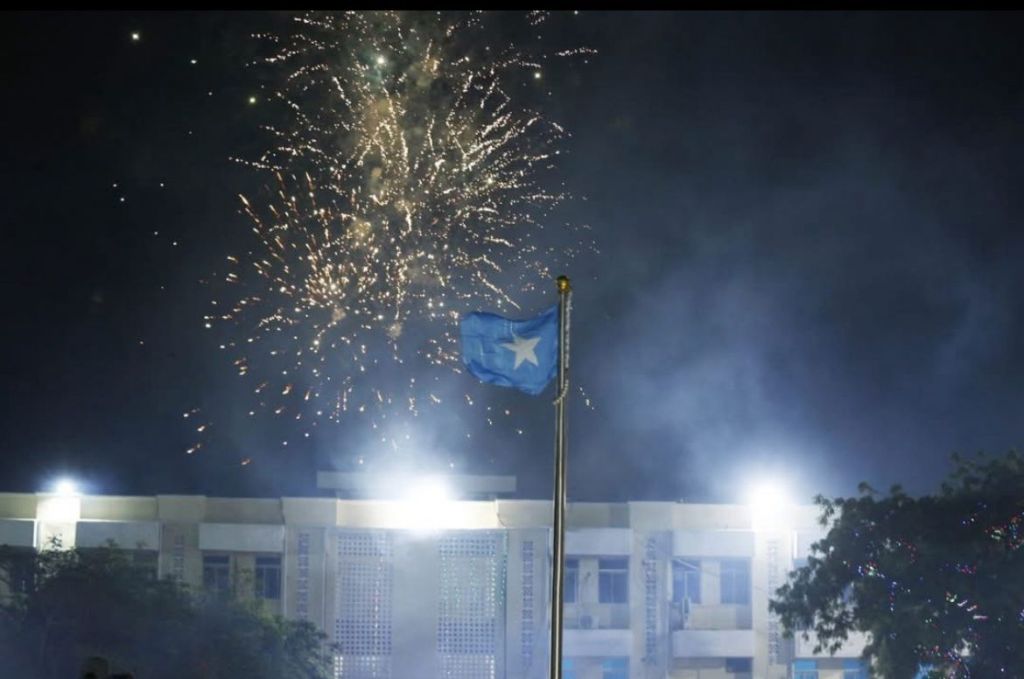
For a brief moment, the post-independence Somali flag wasn’t just a symbol, it was a promise. A promise of dignity, sovereignty, and the erasure of colonial scars underpinned by clan divisions and rivalries. Somali independence movements including the Somali Youth League (SYL) and the Somali National League (SNL) stood as the political vanguard of this vision. And the world watched a star rise.
Democracy in the Horn: The Sixties That Could Have Been Ours
The 1960s in Somalia weren’t perfect but they were promising. A parliamentary system with real elections, peaceful transfers of power, and pan-African idealism animated Mogadishu. Somalia was far from rich, but it was dignified. Its diplomats spoke with purpose in Addis Ababa and New York alike.
Somali poets were revolutionaries. Its language, codified and standardized, became a point of cultural resistance. And for once in Africa, the suit-and-tie politics of the capital didn’t drown out the ‘baadiyo’ voices from the hinterland.
The Dream of Somali Unification: The Romance and the Rage
What unified the Somali spirit wasn’t just anti-colonialism, it was unfinished business. The Somali people had been sliced five ways by European rulers playing cartographer with a machete. Parts of Somalia were trapped in Ethiopia (Western Somali Region), others in Kenya (NFD), Djibouti was still under French sway, and while British Somaliland had been folded in with the south under Italian control to form the first Somali Republic.
The Republic – the dream of reuniting these lands – wasn’t mere patriotism. It was rebellion against geography drawn in European ink.
In the 1970s, this dream took up arms. Somalia attempted to liberate its western region from Ethiopia in the Ethio-Somali War of 1977, trying to liberate its kin. For a moment, it looked like David might actually beat Goliath. But geopolitics is rarely romantic: the Soviet Union flipped sides, the Cubans ran behind, the U.S. blinked, and Somalia’s military gamble collapsed.
The Fall: From Scientific Socialism to Systemic Sabotage
The defeat of 1978 was a devastating blow to Somalia and its leadership. Disillusionment spread, opposition movements began to gain traction, and arrests soon followed. Sensing an opportunity, Ethiopia started courting disaffected Somalis who felt increasingly marginalised by the regime, further heightening paranoia within General Mohamed Siyad Barre’s inner circle. As a result, armed opposition was born. Barre’s initial promise of reform, mass literacy and modernisation turned into tyranny. Merit gave way to clan loyalty. Dissent was criminalised, and those who opposed the regime often vanished without a trace. Opposition was no longer just a threat, it became a justification for tyranny, as Barre’s growing paranoia hardened into state policy.
By 1991, one of Africa’s most politically mature republics had no government. Mogadishu burned. Warlords carved up the country. The dream turned nightmare.
And the world, fatigued from its Cold War hangover, turned its back. This was further worsened by the events of Mogadishu in 1993 which was utilised by western media to categorise Somalia as an ungovernable failed state.
Somalia Now: A House Divided Can’t Fight Al-Shabaab
Sixty-five years on, Somalia is a republic in name, a federation in crisis.
Somaliland operates like a de facto state, complete with elections, a passport, and pride. Yet it’s locked in a political limbo, unrecognised by the world, unacknowledged by Mogadishu beyond platitudes. Unity remains on paper, but not in practice.
Federal Member States have turned federalism into feudalism, competing for influence, hoarding donor funds, and often undermining national cohesion. Tribalism has become institutionalised, not just socially tolerated.
Al-Shabaab, nearly two decades on, still controls swathes of rural areas and towns in the country. Despite tens of thousands of AUSSOM troops and millions in international aid, the insurgency endures. Why? Because Somalia’s military is fragmented, underpaid, and deeply politicised. Security sector reform exists in white papers and not on the battlefield. The country’s leadership focused more on entrenching political control in Jubaland and Puntland rather than focusing on unifying the country against Al-Shabab.
And then there’s corruption. Not the quiet, backroom kind, but the kind so brazen it might as well come with a Trump-style press conference. Contracts vanish into thin air, soldiers go unpaid, and every ministry is staffed with more ghosts than a horror film.
Fixing the Future: What Real Reform Looks Like
It’s not all doom. There are glimmers of resilience: a growing tech sector across the nation, a new generation of educated diaspora returning, and grassroots efforts in reconciliation and governance.
But if Somalia is to rise again, it must:
- Strengthen the military while ensuring its independence from politics. Eradicate corruption, and build a system that rewards merit, integrity, and leadership, not loyalty or clan affiliation.
- Reignite dialogue with Somaliland, not out of sentimentality, but through structured compromise and mutual interest.
- Curb clan politics by investing in civil service reform, strenghtening national ID systems, and decentralised service delivery.
- Reclaim the narrative by turning the dream of Somali unification into a diplomatic project, not a militaristic one.
Romance Without Reform is Ruin
The Somali flag still flies in many hearts even if not always over the land. But nostalgia cannot be a strategy. The dream of unity is powerful, but unless paired with accountability, infrastructure, and security, it’s just that: a dream.
At 65, Somalia doesn’t need to choose between idealism and realism. It needs to marry them.
Because only then can a nation that once dreamt for unity learn how to rebuild it: brick by brick, border by border, soul by soul.
 Horumar
Leave a comment